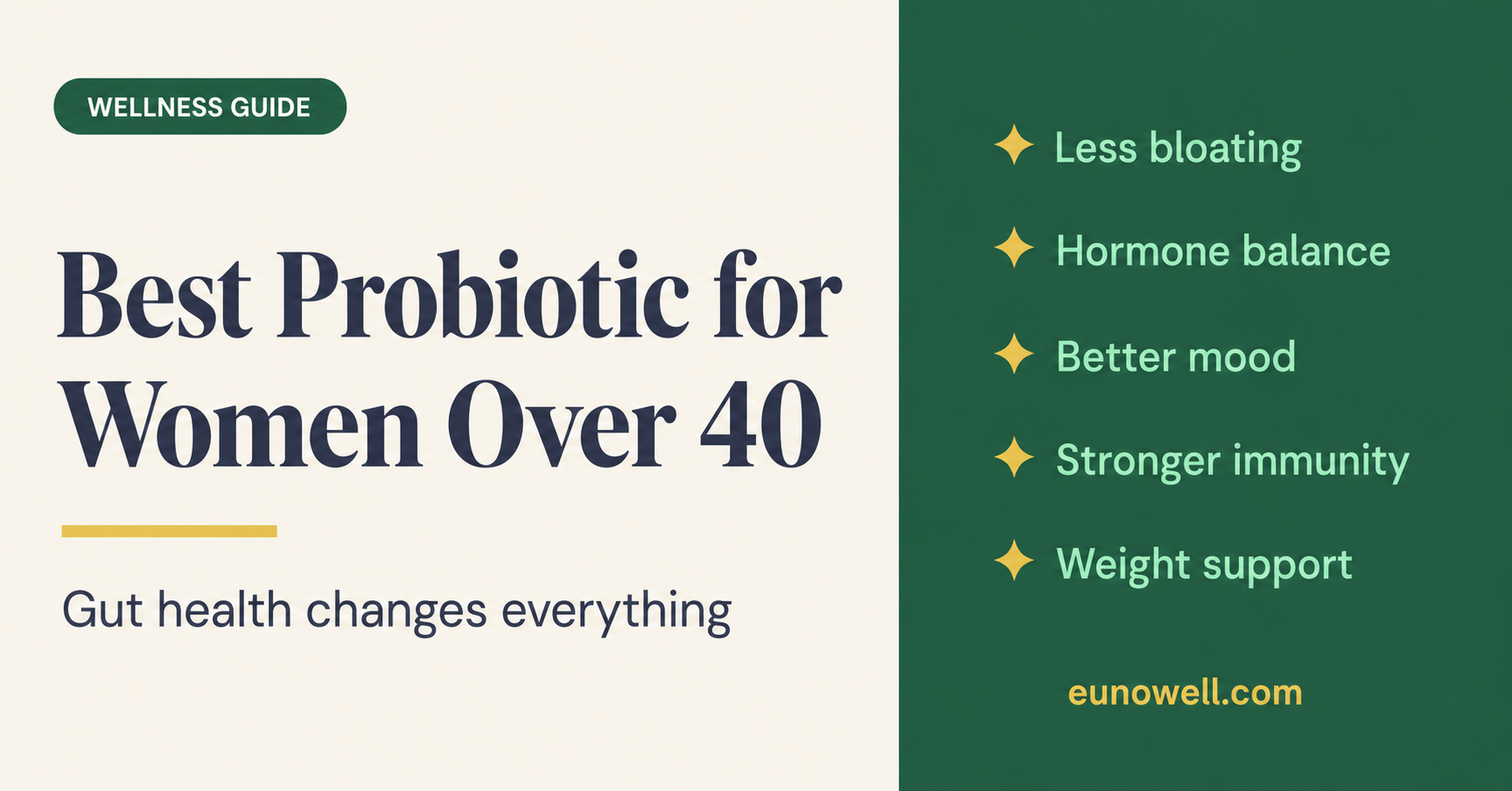
Best Probiotic for Women Over 40: Gut Health Changes Everything
You’ve probably heard that gut health matters. But here’s what most articles leave out: after 40, your gut microbiome changes significantly — and those changes ripple into almost every other aspect of your health. Your mood, your immune system, your hormone balance, your skin, your weight, your sleep — all of it connects back to what’s happening in your gut. The bacteria living in your digestive tract aren’t just about digestion anymore. They’re running much of the show.
The good news? A quality probiotic is one of the most targeted, effective tools available for supporting your gut — and by extension, all of those downstream systems. But not all probiotics are created equal. Here’s how to choose one that actually works.
Why gut health shifts after 40
Your gut microbiome — the trillions of bacteria, fungi, and other microorganisms living in your digestive tract — is not static. It changes throughout your life, and the changes that happen around perimenopause and menopause are particularly significant.
As estrogen declines, the diversity of your gut microbiome tends to decrease. Reduced diversity is consistently linked to inflammation, weight gain, mood changes, and weakened immunity. Meanwhile, chronic stress disrupts the gut-brain axis and changes which bacterial strains thrive. Add in years of antibiotic use, dietary changes, and less physical activity — and you have a gut that needs deliberate support.
Think of your gut microbiome like a garden. When you’re young, it’s diverse and resilient — weeds get crowded out naturally. After 40, the garden needs more tending. Probiotics are one of the best tools for replanting what’s been lost.
What a good probiotic can actually do for women over 40
1. Reduce bloating and digestive discomfort
Bloating that gets worse in your 40s is often a microbiome issue, not just what you’re eating. Specific strains — particularly Lactobacillus acidophilus and Bifidobacterium longum — have strong clinical evidence for reducing bloating, gas, and irregular bowel movements.
2. Support hormone balance
A specific group of gut bacteria called the estrobolome plays a direct role in how your body processes and recirculates estrogen. A healthy, diverse microbiome supports estrogen metabolism — which becomes increasingly important as your own estrogen production becomes less predictable during perimenopause.
3. Improve mood and reduce anxiety
Your gut produces approximately 90% of your body’s serotonin. When gut diversity drops, serotonin production can be affected — contributing to the mood changes, irritability, and anxiety that many women experience in their 40s. Psychobiotics (specific probiotic strains studied for mental health) are one of the most exciting areas of current research.
4. Strengthen immune function
Roughly 70–80% of your immune system lives in your gut. After 40, immune function naturally begins to decline. A diverse, well-supported microbiome is one of the most effective ways to maintain strong immune response as you age.
5. Support weight management
Gut bacteria influence how many calories you extract from food, how fat is stored, and how hunger hormones like ghrelin and leptin are regulated. Specific strains — particularly Lactobacillus gasseri — have been studied for their role in reducing visceral belly fat, which becomes the primary fat storage site after estrogen declines.
What to look for in a probiotic — the real checklist
Strain specificity: different strains do different things. Look for products that list specific strains (e.g., Lactobacillus acidophilus NCFM) not just genus and species. The strain designation tells you what’s actually been studied.
Multiple strains: a blend of 5–10 well-researched strains covers more ground than a single high-dose strain. Diversity in your supplement mirrors diversity in your gut.
Survivability: probiotics must survive stomach acid to reach your intestines alive. Look for delayed-release capsules, enteric coating, or strains known to be acid-resistant.
Prebiotic inclusion: prebiotics are the fiber that feeds probiotics. A probiotic + prebiotic combination (called a synbiotic) is significantly more effective than probiotics alone.
Refrigerated vs. shelf-stable: both can be effective if properly manufactured. Check that the CFU count is guaranteed at expiration, not just at manufacture.
Top probiotic picks for women over 40
Best overall — Garden of Life Dr. Formulated Probiotics for Women
50 billion CFU, 16 probiotic strains specifically selected for women’s health — including strains for vaginal health (Lactobacillus reuteri and Lactobacillus fermentum), digestive support, and immune function. Includes organic prebiotic fiber. Shelf-stable, delayed-release capsules. One of the most comprehensive and well-reviewed women’s probiotics on Amazon.
Best for digestive issues + bloating — Culturelle Digestive Daily Probiotic
Contains Lactobacillus rhamnosus GG — one of the most clinically studied probiotic strains in the world with over 1,000 published human trials. Particularly effective for bloating, diarrhea, and IBS symptoms. Shelf-stable, no refrigeration required.
Best premium synbiotic — Seed DS-01 Daily Synbiotic
24 clinically studied strains in an innovative nested capsule designed to survive stomach acid and reach your colon intact. Includes a prebiotic outer capsule made from Indian pomegranate. Studied for digestive health, heart health, skin health, and immune support. Subscription-based — pricier, but the delivery technology and strain research are genuinely superior.
Best budget option — Physician’s Choice 60 Billion Probiotic
10 diverse strains, 60 billion CFU, includes an organic prebiotic blend. Shelf-stable, delayed-release capsules. Third-party tested. Excellent value — delivers comparable strain diversity to premium brands at a fraction of the cost. Consistently one of Amazon’s bestselling probiotics.
How long until you notice a difference?
Week 1–2: some women notice changes in digestion quickly — less bloating, more regular bowel movements. Others feel slightly worse before they feel better as their microbiome adjusts. This is normal and temporary.
Week 3–4: energy and mood improvements start to become noticeable. Skin clarity sometimes improves in this window too — a reflection of reduced systemic inflammation.
Month 2–3: immune resilience, sustained energy, and more stable mood are where most women notice lasting change. Give any probiotic at least 8 weeks before deciding if it’s working.
Probiotics work best alongside a diet rich in prebiotic fiber — onions, garlic, leeks, asparagus, bananas, oats. The supplement feeds what’s already there; the food feeds what the supplement plants.
Also read: Best Vitamins for Women Over 50 — how to build your complete supplement routine
Also read: Why You’re Always Tired After 45 — gut health and energy are more connected than you think
A healthier gut is the foundation everything else is built on. Start with Garden of Life Women’s Probiotic or Physician’s Choice if budget matters. Give it 8 weeks — your digestion, mood, and energy will tell you it’s working.
Free Quiz
Not sure which supplements you actually need?
Answer 6 questions and get a personalized recommendation — free, no email required.
Take the free quiz →You might also like:
– Best Vitamins for Women Over 50: What Changes and What to Take
– Best Collagen Supplement for Women Over 40: Does It Actually Work?
– Best Magnesium Supplement for Women Over 40: What Nobody Tells You
– Best Protein Powder for Women Over 40: What to Look for and What to Skip
“See all my vetted picks in one place → My Picks”
Disclaimer: This post contains affiliate links. If you purchase through these links, I may earn a small commission at no extra cost to you. I only recommend products I genuinely believe in.