How to Save Money on Prescriptions in the US
Money & Smart Living
A few years ago, my doctor prescribed a medication I needed to take every day. I picked it up at the pharmacy, handed over my insurance card, and paid $187 for a 30-day supply.
I didn’t question it. I assumed that was just the price.
A few weeks later, a friend mentioned she was getting the same medication for $14. Same drug. Same dosage. Different pharmacy — and no insurance.
I had been overpaying by $173 every single month. That’s over $2,000 a year. Gone.
Prescription drug prices in the US vary wildly — sometimes by hundreds of dollars — between pharmacies, and between using insurance vs. paying cash. Most people never know because nobody tells them to check.
Here are 7 ways to pay significantly less for your prescriptions — starting today.
1. Always check GoodRx before filling any prescription
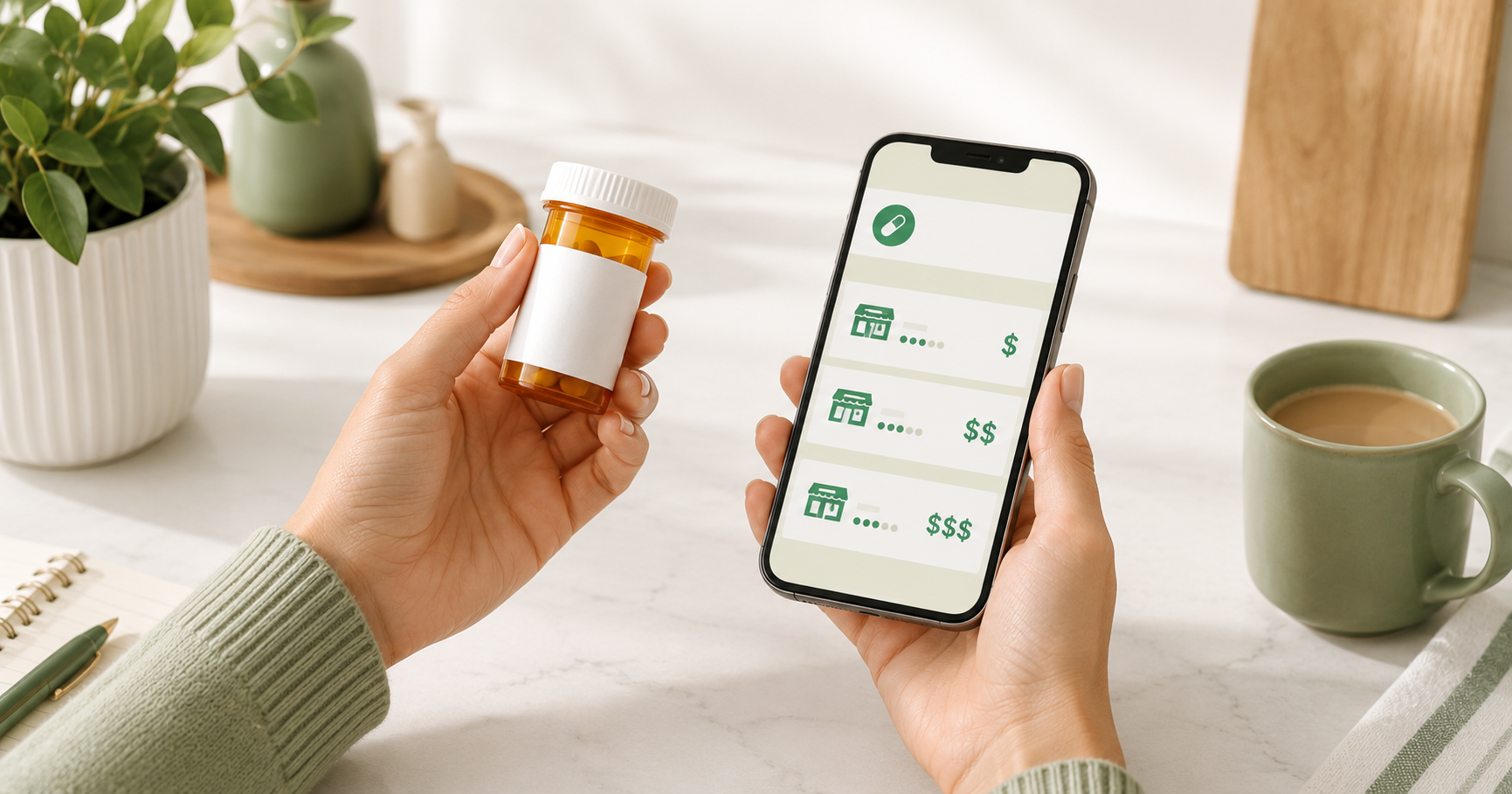
GoodRx is a free app and website that shows you the lowest cash price for any medication at every pharmacy near you. It takes 30 seconds to use and costs nothing.
Here’s the part most people don’t know: the GoodRx price is often lower than your insurance copay. That means it’s sometimes cheaper to pay cash with a GoodRx coupon than to use your insurance at all.
What to do: Before filling any prescription, go to GoodRx.com or download the app. Type in your medication name and dosage. Compare prices at pharmacies near you. Show the coupon at the pharmacy counter — it’s that simple.
Pro tip: GoodRx prices vary by pharmacy. CVS might be $45, but Costco might be $8 for the exact same medication. Always compare.
2. Ask for the generic version
Generic medications contain the exact same active ingredients as brand-name drugs and are held to the same FDA standards. The only difference is the price — generics typically cost 80–85% less than their brand-name equivalents.
Many doctors prescribe brand-name drugs by habit, or because that’s what the drug rep promoted. They often don’t know — or think to mention — that a generic is available.
What to do: Every time you get a new prescription, ask your doctor: “Is there a generic version of this?” If there is, ask them to prescribe it. If you’re already taking a brand-name drug, ask your pharmacist if a generic has become available since your prescription was written.
3. Use your insurance’s mail-order pharmacy
Most health insurance plans offer a mail-order pharmacy option where you can get a 90-day supply of medication for the price of a 60-day supply — or sometimes even less. For medications you take every day, this can add up to hundreds of dollars in savings annually.
What to do: Call the number on the back of your insurance card and ask: “Do you have a mail-order pharmacy option?” If yes, ask how to transfer your long-term prescriptions. It usually takes one phone call and saves money immediately.
This works best for maintenance medications — blood pressure, cholesterol, thyroid, diabetes, antidepressants, and hormones. If you take any of these daily, the mail-order option is almost always cheaper.
4. Check if you qualify for the manufacturer’s patient assistance program
Almost every major pharmaceutical company offers a Patient Assistance Program (PAP) — a program that provides free or heavily discounted medication to people who can’t afford it. These programs are rarely advertised, but they exist for nearly every expensive brand-name medication.
Income limits are often higher than people expect. You don’t have to be in poverty to qualify.
What to do: Go to NeedyMeds.org — a free database of patient assistance programs. Search for your medication and see if you qualify. Your doctor’s office can also help you apply.
5. Split higher-dose pills (with your doctor’s approval)
Many medications come in a higher dose that costs nearly the same as a lower dose. If your doctor approves, you can get the higher-dose pill and split it in half — effectively cutting your prescription cost in half.
This doesn’t work for all medications — some pills are extended-release or coated and shouldn’t be split. But for many common medications, it’s a completely safe and doctor-approved strategy.
What to do: Ask your doctor: “Is my medication available in a higher dose that I could split? Would that be safe for my situation?” Never split pills without medical approval.
Example: A 20mg pill costs $60. A 40mg pill costs $65. Split the 40mg in half = 60 doses for $65 instead of $60 for 30 doses. You just cut your cost in half.
6. Use Mark Cuban’s Cost Plus Drugs
Cost Plus Drugs (costplusdrugs.com) is a pharmacy founded by Mark Cuban that sells medications at manufacturing cost plus a small markup — no insurance needed, no middlemen. For many common medications, the prices are shockingly low.
Some examples: metformin (diabetes) for $4. Imatinib (cancer drug) for $47 instead of $9,000. Lisinopril (blood pressure) for $3.
What to do: Go to costplusdrugs.com and search for your medications. If they carry it, compare the price to what you’re currently paying. Many people find their entire monthly medication cost drops dramatically.
7. Ask your doctor for samples
Pharmaceutical companies provide doctors with free samples of medications — especially newer or more expensive drugs. Many doctors have a cabinet full of samples they’re happy to give patients who ask.
This is especially useful when you’re starting a new medication and aren’t sure if it will work for you, or while you’re waiting for a prior authorization to go through.
What to do: At your next appointment, simply ask: “Do you have any samples of this medication?” It’s a completely normal question and costs you nothing to ask.
Important: Never skip a prescribed medication because of cost without talking to your doctor first. There is almost always a lower-cost alternative — you just have to ask.
The bottom line
Prescription drug prices in the US are not fixed — they’re negotiable, variable, and often dramatically lower than what you’ve been paying. The system isn’t designed to make this easy to figure out. But once you know where to look, the savings add up fast.
Start with GoodRx tonight. Look up every medication you currently take. You might be surprised what you find.
Helpful resources
These free tools can help you find lower prescription prices immediately:
| → GoodRx.com — Compare drug prices at every pharmacy near you. Free to use. |
| → Cost Plus Drugs — Mark Cuban’s pharmacy. Transparent pricing, no insurance needed. |
| → NeedyMeds.org — Free database of patient assistance programs for expensive medications. |
| → PaperDecoder — Got a confusing pharmacy bill or insurance denial? Upload it and get a plain-English explanation in 15 seconds. |
Got a confusing pharmacy bill or insurance letter?
Upload it to PaperDecoder — plain English in 15 seconds. Free to try.
Try PaperDecoder Free →Disclosure: This post is for informational purposes only and does not constitute medical or financial advice. Always consult your doctor before making changes to your medication. PaperDecoder is an EunoWell tool powered by AI.
You might also like:
– How to Lower Your Medical Bills in the US
– What to Do When You Get a Medical Bill You Can’t Afford
– ER vs Urgent Care — How to Choose (And Save Thousands)
– How to Lower Your Health Insurance Costs in 2026