Menopause Joint Pain — Why Everything Suddenly Hurts
You didn’t fall. You didn’t overdo it at the gym. And yet your knees complain on the stairs, your hands feel stiff opening a jar, and one shoulder has quietly stopped moving the way it used to. You’re not imagining it, and you’re not just “getting old.” There’s a real, specific reason this shows up when it does — and it’s the same reason behind most of the other changes you’ve probably already noticed.
Why This Happens
Estrogen does more than regulate your cycle. It also helps keep joints lubricated, supports the collagen that cushions cartilage, and keeps inflammation in check throughout your body. Think of estrogen like the oil in a set of door hinges — you don’t notice it’s there until it starts running low, and suddenly every door in the house creaks.
As estrogen declines during perimenopause and menopause, that quiet, background maintenance work slows down. Joints lose some of their natural cushioning, inflammation has an easier time taking hold, and areas that were already doing a lot of work — hands, knees, hips, shoulders — start to make themselves known. This is common enough that it has an informal name, “menopause arthritis,” even though it isn’t the same thing as actual arthritis.
Frozen shoulder deserves a specific mention here. It’s dramatically more common in women in their 40s and 50s than at any other life stage, and the hormonal connection is a big part of why.
A Word Before You Assume It’s “Just Hormones”
This is important enough to say clearly: hormonal joint pain is real and common, but it isn’t the only possible explanation for new joint pain. Autoimmune conditions, true arthritis, and other issues can look similar in the early stages. If the pain is severe, involves visible swelling or redness, or comes with other new symptoms, that’s worth an actual conversation with your doctor — not just an assumption that it’ll pass once perimenopause does.
What Actually Helps
Move, even though moving is what hurts. It feels backwards, but staying still is usually the worse option. Joints are a little like unused door hinges here too — the less they move, the stiffer they get. Gentle, consistent movement (walking, swimming, easy mobility work) tends to help more than rest does, even on days when starting feels hard.
Strength training protects joints, not just muscles. Stronger muscles around a joint take pressure off the joint itself. This is one of the more surprising fixes for people expecting to be told to “take it easy” — the opposite is usually closer to correct, as long as it’s approached gradually.
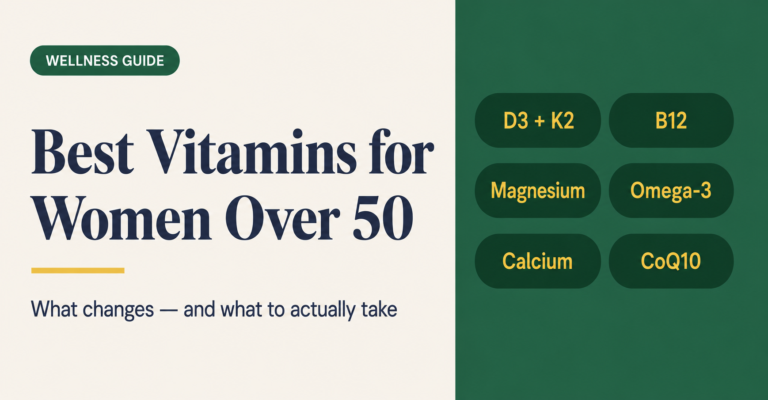
Anti-inflammatory eating patterns can take some of the edge off. Omega-3s in particular (fatty fish, or a quality supplement) are one of the more evidence-backed dietary levers for inflammation generally. This isn’t a cure, but it’s a reasonable, low-risk piece of the puzzle.
Magnesium is worth asking about. Magnesium plays a role in muscle and nerve function, and many women are running low on it without realizing. It won’t rebuild cartilage, but it’s a low-risk, well-studied place to start — the same one we’ve written about for sleep, for a related reason.
HRT comes up in this conversation for a reason. Some women find joint symptoms genuinely improve on hormone replacement therapy, since it’s addressing the actual mechanism rather than just the symptom. This is a real conversation to have with your doctor, not a decision to make from a blog post — but it’s worth knowing this is one of the reasons HRT gets discussed for more than just hot flashes.
Where to Start
If you’re not sure whether what you’re feeling fits this pattern, our Perimenopause Symptom Severity Quiz can help you put a number on it — useful both for your own clarity and for a more concrete conversation at your next doctor’s visit.
And if magnesium is new territory for you, here’s what to actually look for — the same considerations apply whether you’re taking it for sleep, for joints, or both.
This article is for general information and isn’t a substitute for medical advice. New or worsening joint pain, especially with swelling or redness, is worth discussing with your doctor.
Related reading: