How to Negotiate a Medical Bill (And Actually Win)
The bill arrives. You stare at the number. Your stomach drops. Then you do what most Americans do — you either pay it immediately without question, or you shove it in a drawer and hope it disappears. Here’s what nobody tells you: that number on the bill is almost never the final number. And the hospital knows it.
Medical billing in the United States is not a fixed system. The same procedure at the same hospital can be billed at dramatically different rates depending on who’s paying — your insurance company, Medicare, or you as a self-pay patient. Hospitals set their “chargemaster” prices artificially high, fully expecting to collect far less. The sticker price on your bill is a starting point, not a final answer.
The evidence is clear: 62% of patients who contact their billing department receive a price reduction — yet most people pay without ever asking a single question.
This guide gives you the exact steps, scripts, and strategies to negotiate your medical bill down — whether you have insurance or not, whether the bill is fresh or already in collections.
Before You Do Anything: Do NOT Pay the First Bill
This is the most important rule in medical bill negotiation. Once you pay, you lose all leverage. The billing department has no reason to negotiate with someone who has already settled the account.
The first bill you receive is often a summary statement — not even a final, itemized bill. It may not reflect insurance adjustments that are still processing. Before you do anything else, take these three steps:
- Wait for the Explanation of Benefits (EOB) from your insurance company before paying anything. The EOB shows what was billed, what your insurer paid, and what you actually owe.
- Request an itemized bill — not a summary. Under federal law, hospitals must provide one within 30 days of your request.
- Don’t ignore the bill — but don’t rush to pay it either. Call the billing department to let them know you’re reviewing it and will be in touch.
💡 What Is an Itemized Bill?
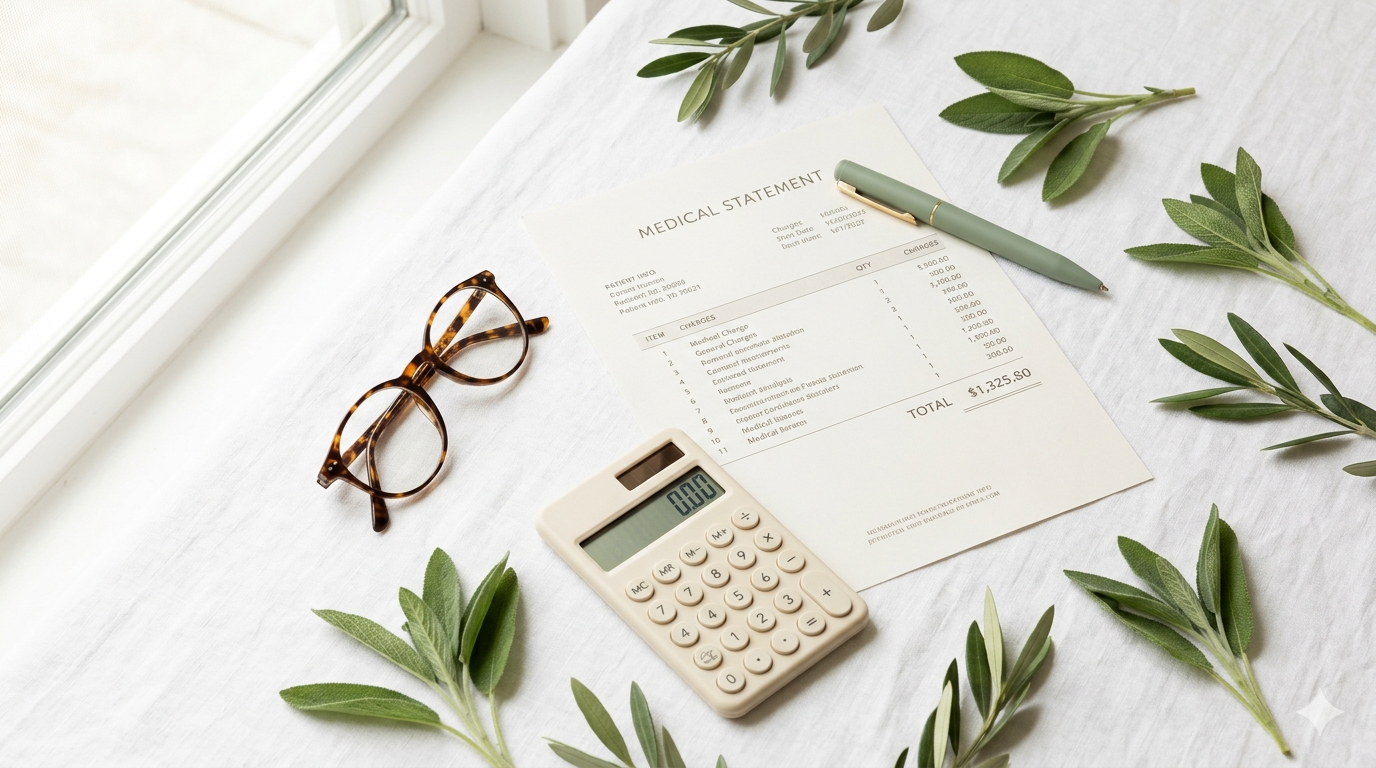
An itemized bill lists every single charge: each procedure code (CPT code), medication, supply, and facility fee — with the specific dollar amount for each. A summary bill just shows totals. You cannot identify errors without the itemized version, and you cannot negotiate effectively without knowing exactly what you’re being charged for. Always request the itemized bill first.
Step 1: Review the Itemized Bill for Errors
Before negotiating price, make sure the charges are even correct. Studies show that up to 80% of medical bills reviewed by patient advocates contain at least one error. Common billing errors include:
- Duplicate charges — the same service billed twice
- Upcoding — being charged for a higher-level service than what was provided (e.g., a Level 5 ER visit when you had a Level 3 condition)
- Unbundling — charging separately for services that should be billed as a package
- Wrong diagnosis or procedure code — a coding error that changes what insurance covers
- Charges for services not received — supplies or procedures that never happened
- Inflated supply charges — $50 for a pair of gloves, $100 for a box of tissues
Go through every line. Google any code or charge you don’t recognize. If something looks wrong, flag it before you do anything else — errors are your strongest negotiating leverage.
📞 Script: Requesting Your Itemized Bill
“Hi, my name is [Name] and I received a bill for account number [#]. Before I make any payment, I’d like to request a fully itemized bill showing all CPT codes, service descriptions, medications, and individual charges. Federal law requires you to provide this within 30 days. Can you send that to me by mail or email?”
Step 2: Know Your Rights Before You Call
You have more legal protection than you probably realize:
- No Surprises Act (2022): Protects you against surprise out-of-network bills for emergency services and certain non-emergency services at in-network facilities. If you were hit with a surprise bill, you may have grounds to dispute it entirely.
- Hospital Price Transparency Rule: Hospitals must publicly post prices for 300 common services. Look up what your procedure typically costs — this is your negotiating anchor.
- Medical debt credit reporting rules: Medical debt under $500 is excluded from credit reports. Paid medical collections are removed. Unpaid medical debt cannot appear on your credit report for at least one year.
- Charity care programs: Nonprofit hospitals are legally required to have financial assistance programs. Many for-profit hospitals do too — and most never advertise them.
⚠️ Never Pay Medical Bills With a Credit Card
If you can’t pay in full, do not put medical debt on a credit card. Hospital payment plans are almost always 0% interest. Credit card interest runs 20–30% APR and will quickly exceed the original bill. Medical debt also has far stronger consumer protections than credit card debt. Always ask for a payment plan directly with the provider first.
Step 3: Make the Call — The Right Way
Tone matters enormously. The person on the other end of the phone has limited authority — but they do have some. Being polite, prepared, and persistent is the combination that works. Being aggressive gets calls hung up.
Before you call:
- Have your itemized bill in front of you
- Know the total amount billed and what you’ve already paid
- Look up the Medicare rate for your procedure (Google “[procedure name] Medicare reimbursement rate”) — this is the floor hospitals work from
- Know what you can realistically afford — a lump sum or a monthly payment
- Have pen and paper ready to write down names, dates, and reference numbers
The Opening Question That Unlocks Discounts
Start every call with this question — it often triggers automatic discounts that billing reps can apply without escalating:
📞 Script: The Opening Question
“Hi, my name is [Name] and I’m calling about account number [#]. I want to pay this bill, but before I do — what is your lowest self-pay rate, and do you have any financial assistance programs I might qualify for?”
That single question — “what is your lowest self-pay rate?” — often results in an immediate 20–40% reduction before any negotiation even begins. Hospitals have pre-set self-pay discounts that billing reps can apply on the spot.
Step 4: Negotiate the Balance
Once you know the self-pay rate and any assistance programs available, you can negotiate further. Here are the three most effective strategies:
Strategy A: Lump Sum Settlement
Offering to pay a discounted amount in full immediately is your strongest negotiating position. Hospitals prefer receiving less money now over chasing full payment over time.
📞 Script: Lump Sum Offer
“I’d like to resolve this account today. I can offer [50–60% of the balance] as a full and final payment. I’m prepared to pay that amount immediately if we can confirm this will settle the account in full. Can you authorize that, or do I need to speak with a supervisor?”
Strategy B: Request a Payment Plan
If you can’t pay in a lump sum, request a payment plan — and ask for it at the reduced self-pay rate:
📞 Script: Payment Plan Request
“I want to pay this bill, but the full amount isn’t something I can manage right now. Can we set up a payment plan at your self-pay rate? I can commit to $[amount] per month. I’d also like to confirm this plan won’t be sent to collections as long as I’m making payments as agreed.”
Strategy C: Apply for Financial Assistance / Charity Care
If your income is limited, ask specifically about financial assistance programs:
📞 Script: Charity Care Request
“I’d like to apply for your financial assistance or charity care program. Can you send me the application, or is there someone I can speak with about eligibility? I understand nonprofit hospitals are required to offer these programs.”
Step 5: If the Billing Department Won’t Budge — Escalate
Front-line billing reps often have limited authority. If you’re not making progress, escalate in this order:
- Ask for a billing supervisor — they have more flexibility to authorize discounts
- Ask for the financial counselor or patient advocate — most hospitals have these roles specifically to help patients navigate bills
- Send a written dispute via certified mail — creates a paper trail and gets reviewed by someone with actual authority
- File a complaint with your state insurance commissioner — state regulators can pressure hospitals to cooperate
- If billed in violation of the No Surprises Act: file a complaint at cms.gov/nosurprises or call 1-800-985-3059
What If the Bill Is Already in Collections?
Don’t panic — and don’t pay immediately. Medical debt in collections is still negotiable, often more so than fresh bills.
- Request debt validation first — send a written request asking the collector to prove the debt is valid and that they have the right to collect it
- Offer a settlement — collectors typically purchase medical debt for pennies on the dollar, so there’s significant room to settle for 25–50% of the original balance
- Get everything in writing before you pay — confirm the settlement amount and that paying will fully resolve the account
- Know your credit report rights — paid medical collections are removed from credit reports under current bureau rules
Your Medical Bill Negotiation Checklist
✅ Before You Pay Any Medical Bill:
✅ Wait for your EOB from insurance before paying anything
✅ Request an itemized bill — not just a summary statement
✅ Review every line for errors, duplicates, and upcoding
✅ Ask “What is your lowest self-pay rate?” — first call, every time
✅ Ask about financial assistance and charity care programs
✅ Never pay with a credit card — request a 0% payment plan instead
✅ Get every agreement in writing before you pay a cent
✅ Write down names, dates, and reference numbers on every call
✅ Escalate if needed — supervisor → patient advocate → written dispute
When to Get Professional Help
Sometimes DIY negotiation isn’t enough — or you simply don’t have the time or energy to fight a large bill alone. Several types of professionals can help:
- Patient advocates — specialize in reviewing bills for errors and negotiating on your behalf. Many work on contingency (no savings, no fee).
- Medical billing advocates — similar to patient advocates but with deeper billing expertise. Often charge a percentage of savings.
- Nonprofit credit counseling agencies — can help if medical debt is part of a larger financial picture
- Your state’s SHIP program (for Medicare-related billing) — free, unbiased counseling
The Bottom Line
Medical bills feel like invoices. They’re not. They’re opening offers in a negotiation — and most people don’t know they’re allowed to negotiate.
The hospital expects some level of pushback. The billing department has tools and programs designed for exactly this situation. Charity care programs go unused every year because patients don’t know to ask. Self-pay discounts get applied every day to people who simply ask the right question.
You don’t need to be aggressive, confrontational, or financially sophisticated. You need to be prepared, polite, and persistent. That combination — more than any other factor — is what determines whether you pay the sticker price or something far more reasonable.
Ask the question. Review the bill. Make the call. The worst they can say is no.
Free Tool
Got a confusing medical bill or EOB?
PaperDecoder explains any medical bill, EOB, or insurance document in plain English in 15 seconds — free, no signup required.
Try PaperDecoder Free →This post is for informational purposes only and does not constitute legal or financial advice. Medical billing rules and consumer protections vary by state and situation. Consider consulting a patient advocate or financial counselor for complex cases.
You might also like:
– What to Do When You Can’t Afford a Medical Bill
– How to Read an Explanation of Benefits (EOB) Without Losing Your Mind
– How to Lower Your Medical Bills in the US
– HSA vs FSA: Which One Actually Saves You More Money?