Perimenopause Anxiety: Why Your Calm Suddenly Disappeared (And How to Get It Back)
Here’s something nobody warns you about: you can be the same steady, capable woman you’ve always been — the one who handles the school pickup line, the budget spreadsheet, the family emergencies without blinking — and then one random Tuesday, your heart starts racing over a text message. Not a bad text. Just… a text.
If that sounds familiar, you’re not “being dramatic” and you’re not losing your grip. Your hormones are renovating the house while you’re still living in it, and anxiety is the dust in the air.
The Pain Point: Why This Anxiety Feels Different
Think about a thermostat. For most of your adult life, estrogen kept your nervous system’s thermostat set to a comfortable, predictable temperature. It helped regulate serotonin and GABA — your brain’s own “calm down” chemicals. During perimenopause, estrogen doesn’t just decline steadily; it swings, sometimes wildly, week to week or even day to day. That’s like someone messing with your thermostat settings randomly, so your house is freezing one hour and sweltering the next. Your body never gets to settle.
That’s why perimenopausal anxiety often feels different from anxiety you may have had before:
- It shows up out of nowhere, with no clear trigger
- It comes with physical symptoms — racing heart, tight chest, jittery hands — that feel almost like a caffeine overdose
- It’s worse at night or in the early morning hours (thank cortisol and blood-sugar swings for that one)
- It can arrive alongside irritability that feels “not like you”
- It doesn’t respond to your usual coping tools the way it used to
Try It: The 90-Second Reset Tool
Before we get to longer-term solutions, here’s something you can use the moment anxiety spikes — in the car, at your desk, standing in the kitchen. It’s built on a simple idea: you can’t think your way out of a racing nervous system, but you can breathe your way out of it.
90-Second Calm Reset
Follow the circle. Breathe in as it grows, out as it shrinks.
Press Start
The Solution: Three Levers That Actually Move the Needle
You don't need to overhaul your entire life. Think of your nervous system like a see-saw — anxiety wins when it's tipped too far toward "alert," and your job is just to add enough weight on the "calm" side to bring it level again. Here are the three levers with the most leverage.
1. Stabilize Blood Sugar (Your Nervous System's Best Friend)
Blood sugar crashes mimic — and worsen — anxiety symptoms almost exactly: shakiness, racing heart, irritability. Eating protein within an hour of waking, and pairing carbs with protein or fat instead of eating them alone, is one of the simplest, most underrated anxiety tools there is.
2. Support the Calming Pathway Nutritionally
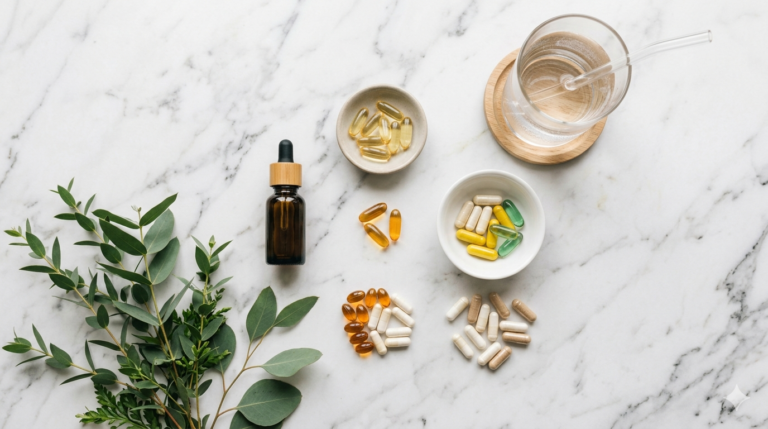
Magnesium is involved in regulating the very GABA pathway that estrogen used to help support. Many women are quietly low in it without knowing. Magnesium glycinate in particular is well-tolerated and specifically studied for its calming effect, without the digestive side effects of other forms.
3. Give Your Body an "Off Switch" Signal
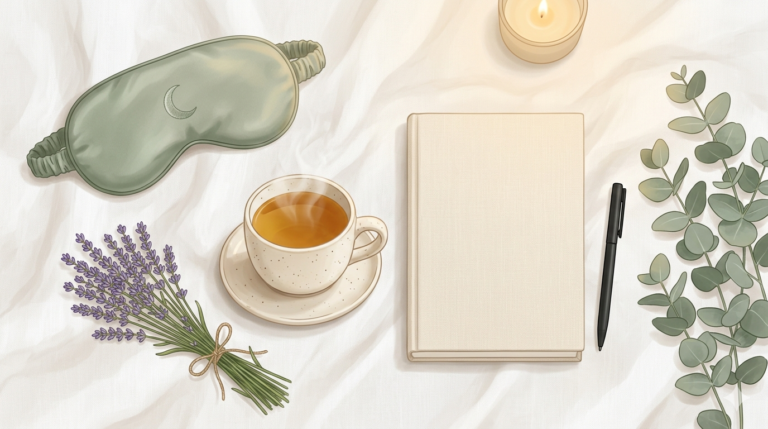
Your nervous system needs a clear, repeated signal that it's safe to power down — especially in the evening. This is less about willpower and more about consistency: same wind-down cues, same rough bedtime, minimal screens in the last 30 minutes.
Product Picks: What We'd Actually Put in Your Cart
Magnesium Glycinate (High Absorption)
Our top pick for evening calm support without next-day grogginess.
Check Price on Amazon →
Ashwagandha (KSM-66 or Sensoril extract)
Well-studied adaptogen for cortisol and stress-response support.
Check Price on Amazon →
Continuous Glucose-Friendly Protein Powder
An easy way to hit "protein within an hour of waking" on busy mornings.
Check Price on Amazon →
When to See a Doctor
If anxiety is interfering with daily functioning, includes panic attacks, or comes with thoughts of self-harm, please reach out to a healthcare provider or a crisis line right away — supplements and breathing tools are support, not a substitute for medical care. Hormone therapy is also a legitimate, effective option worth discussing with your doctor, especially if anxiety is severe.