Why You Wake Up Exhausted After 8 Hours (And the Calculator That Actually Fixes It)
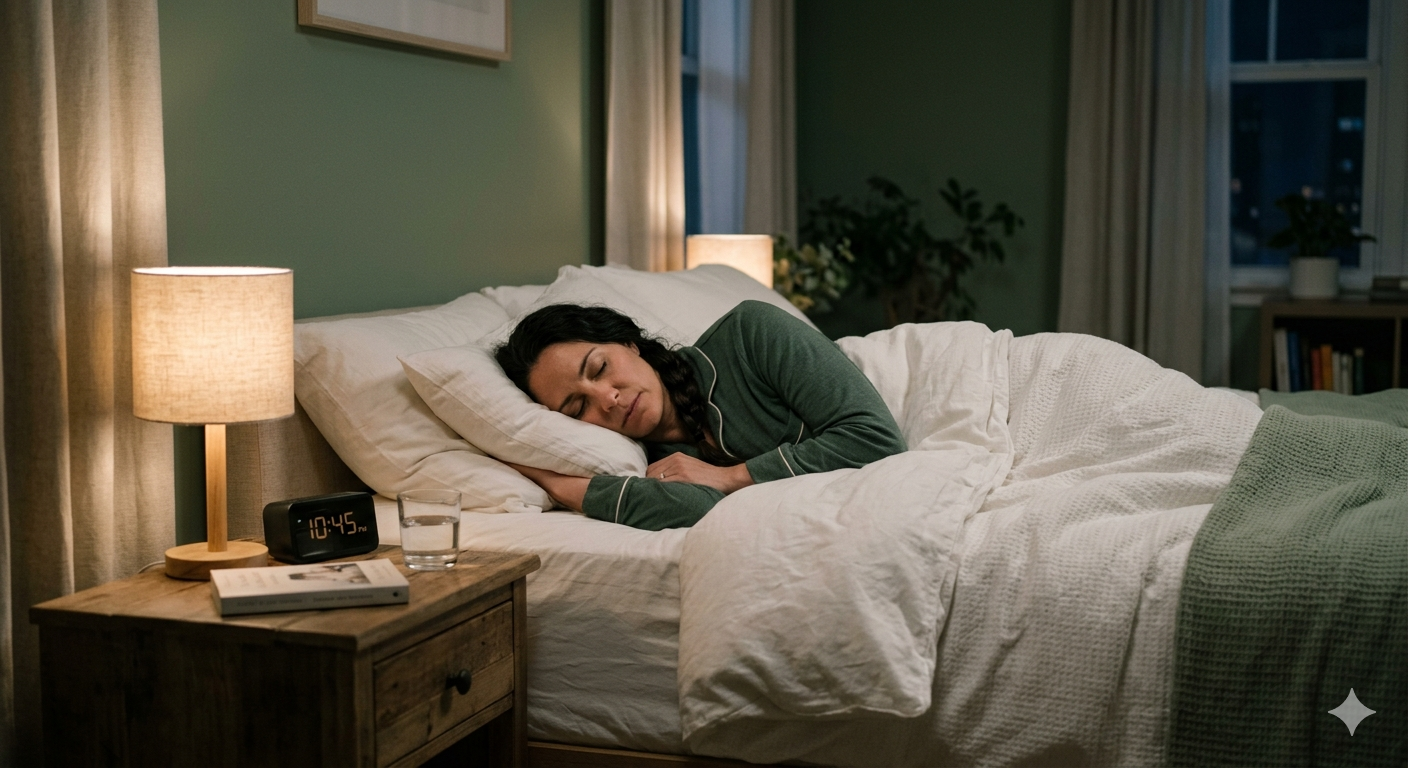
You did everything right last night. You were in bed by 10. You didn’t scroll your phone until midnight. You even skipped your second glass of wine. You gave your body a full eight hours — and you still woke up feeling like you’d been hit by a truck.
If this sounds familiar, you’re not broken. And you’re not imagining it.
What’s happening is actually pretty simple once you understand it — and there’s a fix that doesn’t involve another supplement, a sleep retreat, or replacing your mattress. It starts with understanding how sleep actually works.
Your Sleep Isn’t a Straight Line — It’s a Series of Waves
Most of us picture sleep as one long, continuous rest. You close your eyes, you drift off, you wake up eight hours later. Simple.
But that’s not what your brain is doing at all.
Your brain actually moves through sleep in 90-minute cycles — like waves rolling in from the ocean. Each wave has several stages: light sleep, deep sleep, and REM (the dreaming stage where memory consolidation and emotional processing happen). Then the wave ends, you briefly surface toward waking, and the next cycle begins.
Here’s the part that changes everything: how you feel when you wake up depends almost entirely on where in that wave your alarm catches you.
Wake up at the end of a cycle — when you’re naturally surfacing — and you feel rested, even if you only got six hours.
Wake up in the middle of a cycle — especially during deep sleep — and you feel groggy, disoriented, and exhausted, even after a full eight hours.
That’s not a sleep problem. That’s a timing problem.
Why This Gets Harder After 40
Here’s what your doctor may not have told you: the way you sleep changes significantly in your 40s — and especially in perimenopause.
Estrogen and progesterone play a direct role in sleep architecture. As those hormones fluctuate, your deep sleep stages get shorter and lighter. You’re more likely to wake in the middle of the night (hello, 3am staring at the ceiling). You spend less time in restorative slow-wave sleep.
This means two things. First, you’re getting less deep sleep per cycle than you did at 30. Second, you’re more sensitive to being interrupted mid-cycle. The timing of when you wake up matters more now than it ever did before.
Getting eight hours is a good goal — but waking up at the right moment in your cycle is what actually determines whether those eight hours feel like rest.
Perimenopause has a way of disrupting sleep just when you need it most — and waking up at the wrong point in your sleep cycle can leave you feeling groggier than if you’d slept less overall.
This calculator works backward from your wake-up time to suggest bedtimes that align with full sleep cycles, rather than just counting hours.
If 2 am wake-ups are a regular pattern for you, this piece on sleep loss and spending explains a connection most people don’t expect.
Use the Sleep Cycle Calculator
Enter your wake-up time below. The calculator will show you the ideal bedtimes — timed to the end of complete 90-minute sleep cycles, with a buffer already built in for the time it takes you to fall asleep.
Free Tool
Sleep Cycle Calculator
💡 Why this works: Sleep moves in 90-minute waves. Waking at the end of a wave feels natural — waking mid-wave leaves you groggy even after 8 hours.
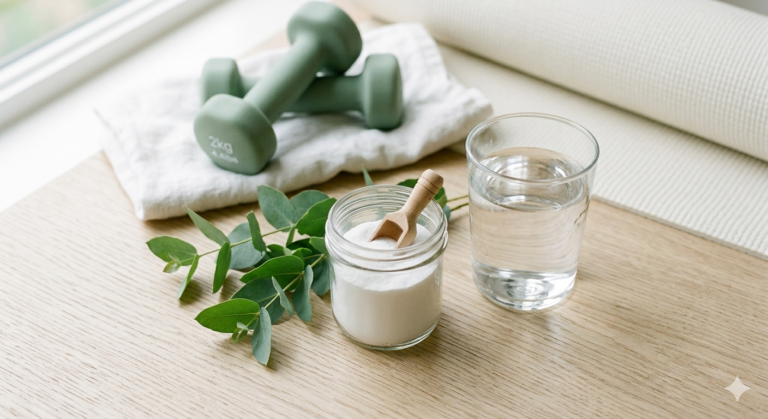
🌿 Tip: Taking magnesium glycinate 30–60 min before your target bedtime can help your body settle into sleep faster — especially if night heat or racing thoughts are an issue.
The “sweet spot” it highlights is 5 complete cycles, which gives you 7.5 hours of sleep — the amount most sleep researchers consider optimal for adults. Four cycles (6 hours) works in a pinch. Six cycles (9 hours) is great when you can get it.
The key is landing at the end of a cycle, not somewhere in the middle.
A Real Example
Say you need to be up at 6:30 AM. If you take about 15 minutes to fall asleep, your ideal bedtimes are:
- 9:15 PM — 6 cycles (9 hours of sleep)
- 10:45 PM — 5 cycles (7.5 hours) ← sweet spot
- 12:15 AM — 4 cycles (6 hours, if you’re up late)
Notice that 10:00 PM isn’t on that list. If you fall asleep at 10:15, your alarm at 6:30 AM catches you about 45 minutes into your fifth cycle — right in the middle of deep sleep. That’s the recipe for the zombie-at-the-coffee-maker feeling.
Fifteen minutes later — or fifteen minutes earlier — and you surface naturally. Completely different morning.
3 Things to Do in the Last Hour Before Bed
Knowing your bedtime is half the battle. Getting there is the other half. Here’s what actually helps, especially after 40.
Wind down the temperature. Your body needs to drop about 1–2 degrees Fahrenheit to initiate deep sleep. A cool bedroom (around 65–68°F) is one of the most evidence-backed sleep interventions there is. If night sweats or hot flashes are a problem, this matters even more — cooling mattress pads and breathable bedding can make a measurable difference.
Cut the screens 45 minutes before your target bedtime. Blue light suppresses melatonin production — the hormone that signals your brain it’s time to sleep. After 40, your melatonin production is already lower than it was at 25. You don’t need anything making it harder.
Try magnesium glycinate. This is the one supplement that consistently shows up in sleep research for women in midlife. Magnesium helps regulate the nervous system and supports GABA activity — the brain’s “calm down” signal. Glycinate is the form that’s best absorbed and least likely to cause digestive issues. Take it 30–60 minutes before your target bedtime. I wrote a full breakdown of magnesium forms and dosing right here if you want to go deeper on this.
What to Look for If You Want to Go Further
The calculator and the habits above solve the timing problem. But if you’re waking up frequently at night, struggling to fall asleep at all, or dealing with significant night sweats, there may be more going on worth addressing directly.
For cooling at night: A cooling mattress pad or topper — the Chilipad and BedJet are both well-reviewed — can significantly reduce night-sweat disruptions, one of the biggest cycle-breakers for women in perimenopause.
For tracking your sleep: A wearable like the Oura Ring or a Fitbit tracks your sleep stages and shows you where you’re getting interrupted. Seeing the data is genuinely eye-opening.
For magnesium: Magnesium Glycinate by Pure Encapsulations is a clean, well-dosed option without fillers. Thorne Magnesium Bisglycinate is another solid choice. (Swap in your affiliate links before publishing.)
For weighted comfort: A weighted blanket in the 10–15 lb range has been shown to reduce nighttime cortisol and improve subjective sleep quality. Particularly helpful if anxiety or restlessness tends to keep you up.
The One Thing to Remember
You don’t need more hours. You need better-timed hours.
Your body already knows how to sleep — the 90-minute cycle is built in. What changes after 40 is that your sleep gets lighter, your hormones shift, and the margin for error shrinks. Use the calculator. Pick a bedtime that lands at the end of a cycle. And if magnesium is something you haven’t tried yet, it’s genuinely worth a month of testing.
Good sleep is not a luxury at this stage of life. It’s the foundation everything else is built on — your mood, your metabolism, your memory, your immune system. Getting it right is one of the highest-return investments you can make.
Not sure which supplements are actually worth taking? Take the free supplement quiz — it takes 2 minutes and gives you a personalized starting point based on your specific symptoms.
Did you know menopause can quietly cost you $500–$2,000+ a year — most of it unplanned? We built a free calculator that adds it all up for you.
This post is for informational purposes only and does not constitute medical advice. Always consult with a qualified healthcare provider before starting any new supplement or making changes to your health routine.
You might also like:
– Best Magnesium Supplement for Women Over 40 — What Nobody Tells You
– Perimenopause Symptoms Checklist: What’s Actually Normal After 40
– How to Lower Cortisol Naturally