How to Manage Daily Stress (Without Overhauling Your Life)
You don’t need a spa weekend, a meditation retreat, or a complete life overhaul to manage stress better. What you need are a handful of small, consistent habits that work with your nervous system instead of against it. The good news: the most effective stress management strategies are also the simplest ones — and none of them require more than a few minutes a day.
Stress in midlife is real, common, and increasingly well understood. Nearly 4 in 10 women feel mood changes during perimenopause — and navigating hormonal shifts alongside work, family, and life transitions can be genuinely overwhelming. But the solution isn’t to eliminate stress — that’s not possible. The solution is to build a nervous system that can handle stress without staying stuck in it.
This is Part 2 of our Mind & Body Reset series. In Part 1, we covered sleep hygiene — the foundation everything else builds on. Here, we tackle the daily stress that keeps too many women running on empty, and the practical strategies that actually help.
Why Stress Hits Differently After 40
Stress isn’t just a mental experience — it’s a full-body physiological response. And after 40, that response changes in ways that make stress harder to shake.
Estrogen and progesterone help buffer the stress response — they modulate cortisol, support GABA (the brain’s calming neurotransmitter), and help the nervous system recover after a stressful event. As these hormones decline during perimenopause, that buffer weakens. The same stressor that felt manageable at 35 can feel overwhelming at 45 — not because you’ve gotten less resilient, but because your hormonal stress-protection system has changed.
At the same time, many women in midlife are carrying a uniquely heavy load: aging parents, teenagers, demanding careers, financial pressures, and the invisible labor of running a household. Many people experience the same day-to-day strains related to caregiving, relationships, health, work and money — but women tend to carry a disproportionate share of that burden.
Understanding this context matters because it changes the approach. Managing stress after 40 isn’t about toughening up or finding better coping mechanisms. It’s about addressing the physiological reality of a more reactive nervous system — and building the habits that restore its natural equilibrium.
💡 The Stress–Sleep–Cortisol Loop
Stress raises cortisol. High cortisol disrupts sleep. Poor sleep raises cortisol. This is why stress and sleep problems almost always travel together in midlife — and why addressing both simultaneously is more effective than tackling either alone. If you haven’t read Part 1 of this series (sleep hygiene), that’s worth reading alongside this post — the strategies reinforce each other.
8 Practical Ways to Manage Daily Stress
1. The 5-Minute Morning Reset — Before Anything Else
How you start your morning sets the neurochemical tone for your entire day. Most people start by immediately reaching for their phone — which means starting the day with other people’s demands, news alerts, and social comparison before your nervous system has even fully woken up.
A 5-minute morning practice before checking your phone can meaningfully change your stress baseline for the day. Options with evidence behind them:
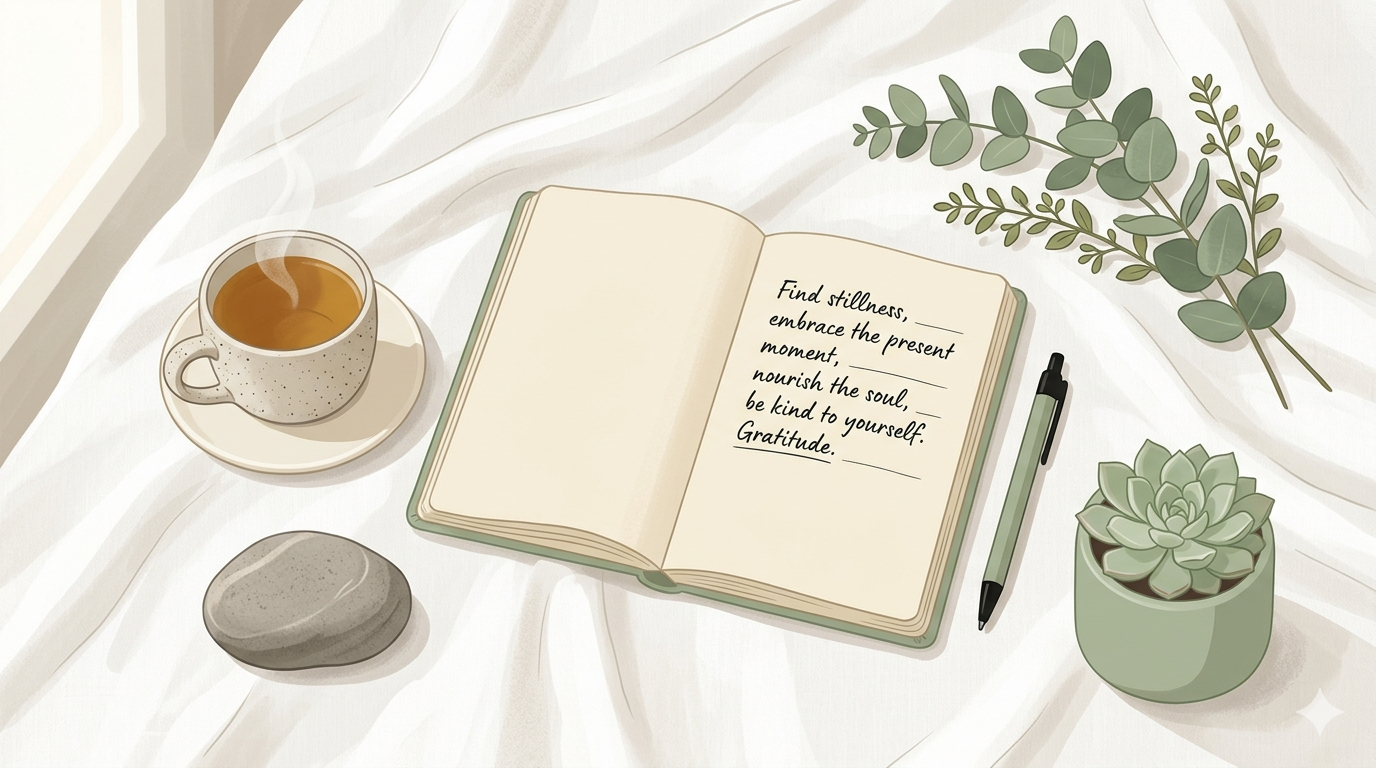
- Gratitude journaling — write 3 specific things you’re grateful for. Practicing gratitude every day can improve your physical and emotional well-being. The specificity matters: “I’m grateful for my health” is less effective than “I’m grateful that I slept well last night.”
- 5 minutes of stillness — no phone, no input. Just coffee and quiet. This is not doing nothing — it’s allowing your nervous system to start the day in a regulated state
- Intention setting — one sentence: “Today I want to feel ___.” This simple act shifts your orientation from reactive to intentional
2. Breathwork — The Fastest Cortisol Reset Available
Breathwork is the most underrated stress management tool available — and one of the few interventions that can measurably lower cortisol within minutes, not weeks. It works by directly activating the parasympathetic nervous system (your “rest and digest” mode), which is the physiological opposite of the stress response.
Three techniques with strong evidence:
🫁 Box Breathing — For In-the-Moment Stress
Inhale 4 counts → Hold 4 → Exhale 4 → Hold 4. Repeat 4–6 times. This pattern directly activates the vagus nerve and shifts the nervous system out of threat mode within 2–3 minutes. Used by Navy SEALs before high-stress situations — it works.
🫁 4-7-8 Breathing — For Anxiety and Pre-Sleep
Inhale 4 counts → Hold 7 → Exhale 8. The extended exhale is the key — a longer exhale than inhale activates the parasympathetic nervous system more powerfully. Best used before bed or during acute anxiety spikes.
🫁 Physiological Sigh — Fastest Reset
Double inhale through the nose (breathe in, then sniff again to top up) → long slow exhale through the mouth. Research from Stanford shows a single physiological sigh is the fastest way to reduce physiological arousal in real time. Takes 5 seconds.
3. Move Your Body — Even Briefly
Physical movement is one of the most powerful stress management tools available — but it doesn’t need to be a full workout to work. Staying physically healthy can improve your emotional well-being. Every little bit of physical activity helps. Start small and build up — breaking it into smaller amounts such as 20 to 30 minutes a day works well.
What matters for stress specifically:
- Walking — particularly in nature — measurably reduces cortisol, activates the parasympathetic nervous system, and provides sensory engagement that interrupts rumination. Even 20 minutes makes a difference
- Strength training 2–3x per week — reduces resting cortisol over time and supports the mood-stabilizing neurotransmitters that hormonal changes disrupt
- Yoga — combines movement, breathwork, and attention regulation; one of the most studied interventions for stress reduction in women
- Dancing, swimming, cycling — anything that gets you into your body and out of your head
4. Reframe — Change How You Think About Stress
Experts call changing the way we think about and respond to stress “reframing.” Keeping situations in perspective is an important way to boost stress resilience. You can practice reframing and get better at it over time.
Practical reframing strategies:
- “Is this still going to matter in 5 years?” — one of the most effective cognitive tools for proportioning your stress response to the actual threat level
- The “and” technique — instead of “I’m stressed AND I can’t handle this,” try “I’m stressed AND I’ve handled hard things before.” Both are true; the second is more useful
- Name the feeling — research shows that simply labeling an emotion (“I’m feeling overwhelmed right now”) activates the prefrontal cortex and reduces the intensity of the feeling. Name it to tame it
- Separate what you can control from what you can’t — stress often expands to fill everything. A quick list of what’s actually in your control vs. what isn’t can shrink it back down to size
5. Set Boundaries — The Stress You Can Prevent
Not all stress comes from how you respond to events. Some stress comes from the volume of demands on your time, energy, and attention — and that volume can be reduced by saying no more intentionally.
For many women over 40, the hardest part of stress management isn’t the techniques — it’s giving themselves permission to not do everything for everyone. Some practical starting points:
- The 24-hour rule — when asked to commit to something, say “let me check my schedule and get back to you.” This creates space between the request and your response
- Identify your top 3 priorities for the day — and protect those. Everything else is negotiable
- Recognize “urgency theater” — most things that feel urgent are not emergencies. The email that arrives at 9pm rarely needs a 9pm response
- Delegate what you can — at home, at work. Asking for help is a stress management strategy, not a character flaw
⚠️ The Scrolling Trap
Social media and news consumption is one of the most significant and underappreciated sources of chronic low-grade stress. The endless scroll is designed to trigger your threat-detection system repeatedly — keeping your cortisol elevated even when nothing in your actual life is threatening. Consider setting specific times for checking news and social media, rather than allowing it to run as a constant background stress throughout the day.
6. Connect — Oxytocin Is a Natural Cortisol Blocker
Oxytocin — the bonding hormone released during positive social connection — directly suppresses cortisol. Talk with people you trust about your concerns and how you are feeling. Connect with your community-based or faith-based organizations.
This isn’t soft advice. The research on social connection and stress is among the strongest in the field. Chronic loneliness is as physiologically damaging as smoking 15 cigarettes a day. And for women especially, face-to-face connection with other women has a measurable stress-buffering effect that other forms of connection don’t replicate.
Practical approaches:
- Schedule regular time with people who restore you — not just social obligations
- Pet ownership reduces cortisol; even brief interactions with animals lower stress hormones measurably
- Physical touch — hugging, holding hands — releases oxytocin rapidly
- Volunteering and community engagement provide both connection and purpose — a powerful combination for stress resilience
7. Create Micro-Recovery Moments Throughout the Day
Stress compounds when there’s no recovery. Most people treat recovery as something that happens on weekends or vacations — but the nervous system needs recovery throughout the day, not just at the end of it.
Micro-recovery moments — brief pauses that shift your nervous system from stress mode to recovery mode — are more effective than long recovery periods if they happen consistently. Think of it like interval training for your nervous system.
What a micro-recovery can look like:
- A 2-minute breathing exercise between meetings
- Stepping outside for 5 minutes of natural light and fresh air
- Eating lunch away from your desk — without your phone
- A 10-minute walk after dinner
- 5 minutes of stretching in the afternoon
- A cup of tea, slowly, without multitasking
None of these are dramatic. All of them give your parasympathetic nervous system a chance to activate and reset before the next stressor arrives.
8. Mindfulness — Smaller Than You Think, More Powerful Than You Expect
Mindfulness meditation remains one of the most effective and widely recommended stress management techniques today. But “mindfulness” doesn’t have to mean sitting cross-legged for 30 minutes. Research shows that even brief, informal mindfulness practices reduce cortisol and improve stress resilience.
Entry points that don’t require a meditation app or dedicated time:
- Single-tasking — doing one thing at a time, with full attention. Washing dishes, eating, walking — without a podcast or phone. This is mindfulness
- The 5-4-3-2-1 technique — name 5 things you can see, 4 you can touch, 3 you can hear, 2 you can smell, 1 you can taste. Brings you into the present moment immediately
- Body scan — 2 minutes of noticing physical sensations from head to toe, without trying to change them. Interrupts the stress loop by shifting attention from thoughts to sensations
- Formal meditation — if you want to go further: 10 minutes daily with an app like Headspace, Calm, or Insight Timer builds measurable structural changes in stress resilience over 8 weeks
Building Your Personal Stress Management System
The most important principle in stress management is this: the best technique is the one you’ll actually do. A 2-minute breathing practice you do every day is more effective than an elaborate routine you do once a month.
Build your system in layers:
| Layer | Practice | Time Required |
|---|---|---|
| Morning anchor | 5 minutes of stillness or gratitude before phone | 5 min |
| In-the-moment reset | Box breathing or physiological sigh when stressed | 2–5 min |
| Daily movement | 20–30 min walk or strength training | 20–30 min |
| Micro-recoveries | 2–3 brief pauses throughout the day | 2–5 min each |
| Evening wind-down | Journal, read, or connect — screens down | 20–30 min |
Your Daily Stress Management Checklist
✅ Build These Into Your Day:
✅ 5 minutes of quiet before your phone — every morning
✅ Learn one breathing technique — box breathing or 4-7-8
✅ Move your body daily — even a 20-minute walk counts
✅ Build 2–3 micro-recovery moments into your day
✅ Reduce social media and news scrolling — set specific check-in times
✅ Prioritize connection — schedule time with people who restore you
✅ Practice one reframing technique when stress spikes
✅ Identify one boundary to set this week — and hold it
✅ Wind down with screens off — 30–60 minutes before bed
When to Seek Professional Support
Self-management strategies work well for everyday stress. But some situations are beyond what lifestyle habits can address alone:
- Anxiety that is persistent, overwhelming, or significantly affecting daily function
- Depression or prolonged low mood that doesn’t lift
- Trauma responses — past or present
- Stress related to a major life event (loss, divorce, serious illness) that isn’t resolving
- Physical symptoms of chronic stress (chest tightness, chronic headaches, digestive issues) that warrant ruling out medical causes
Therapy — particularly Cognitive Behavioral Therapy (CBT) and Acceptance and Commitment Therapy (ACT) — has strong evidence for stress and anxiety management. Combining professional therapy with daily stress-reducing habits like mindfulness, exercise, and healthy boundaries can significantly improve your overall mental health and resilience. Seeking help is not a sign that your stress is beyond management — it’s a sign that you’re taking it seriously.
The Bottom Line
Managing stress after 40 is not about becoming someone who doesn’t get stressed. It’s about building a nervous system that can process stress without staying stuck in it — one that moves through difficult moments rather than accumulating them.
The strategies in this post won’t eliminate stress from your life. But applied consistently, they will change how your body and mind respond to it. And over time, that change is profound — in energy, mood, sleep, relationships, and health.
Start small. Pick one or two practices that feel accessible. Do them consistently. Build from there.
Next in the Mind & Body Reset Series → Part 3: Burnout Prevention and Daily Mindfulness — How to Recognize It Before It Stops You
Free Tool
Track your daily wellness habits in 3 seconds
The 3-Second Tracker makes it simple to check in on your key health habits every day — free, no signup required.
Try the 3-Second Tracker →This post is for informational purposes only and does not constitute medical or psychological advice. If you are experiencing significant mental health challenges, please consult a qualified healthcare provider or mental health professional.
You might also like:
– Sleep Hygiene Guide: How to Actually Fall Asleep (And Stay Asleep) After 40
– How to Lower Cortisol Naturally: What Actually Works After 40
– How to Lose Belly Fat After 40: What Actually Works
– Perimenopause Symptoms Checklist: What’s Actually Normal After 40